

It’s not every day you get to see a film about an ancient Egyptian vampire whilst surrounded by genuine artefact’s from the tombs of pharaohs. So when the Petrie Museum announced they were screening The Hunger, as part of their LGBT programme, this Anne Rice addict jumped at the chance. I hadn’t seen The Hunger since I was a vampire-crazed teen, obsessed with Lestat and the blood drinkers from Poppy Z. Brite’s novel Lost Souls. David Bowie was one of my first crushes, so Vampire Bowie was basically the pinnacle of hotness to fifteen year old me. Watching the opening scene, filmed in the Heaven club on Villiers Street, where Miriam and John Blaylock choose their nubile victims as Peter Murphy performs Bela Lugosi’s Dead, took me straight back to listening to Bauhaus in my childhood bedroom, a dog-eared copy of Dracula in my hand.
The Hunger was Tony Scott’s first major feature film, and his background in advertising and music videos is immediately apparent in the highly stylised opening minutes of the film. What struck me about the overall look of the movie, is that while it looked dated in the mid-Nineties, I don’t think the hairstyles and fashions wouldn’t look out of place in an East London music venue today. With fashion and music revisiting the Eighties, it might be an ideal time for this cult flick to find a new audience.
The story centres on centuries old vampire, Miriam Blaylock (Catherine Deneuve), and her husband, John (Bowie). While drinking human blood sustains the vampires’ unnatural long life, only Miriam appears to be truly immortal. The lovers she takes and turns into supernatural creatures have a limited shelf-life, as John finds out when he begins to age rapidly one day.
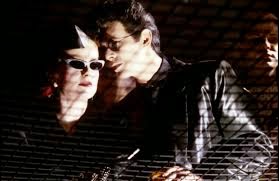
The Hunger, released in 1983, pre-dates wide-spread awareness about HIV and AIDS, but the notions of vampires and disease are often associated with female sexuality and homosexuality in the Gothic tradition. The love scene between Miriam and Sarah, set to the strains of Delibes’ Flower Duet, looks tame today, but at the time would have been rather risqué. Perhaps influenced by the relationships between Lestat and his mother, and Louis and the child vampire, Claudia, in the works of Anne Rice (which Scott was interested in adapting for the screen), it’s John’s murder of young Alice which retains the ability to shock.
While roundly panned by critics, and a box office flop, The Hunger became a cult classic, and deservedly so. While the ending (rewritten at the studio’s request) is somewhat confusing, the performances and SFX really stand up. It’s also fun to see Susan Sarandon (Janet Weiss in The Rocky Horror Picture Show) paired with Cliff de Young, who had played the second incarnation of Brad Majors in the 1981 sequel, Shock Treatment. A pleasing mash-up of high art pretensions and pop culture, sensuality and the grotesque, The Hunger exposes some difficult truths about love, lust, and the transient nature of human life.
Photos courtesy of IMDB and Wikipedia
Leave a Reply