
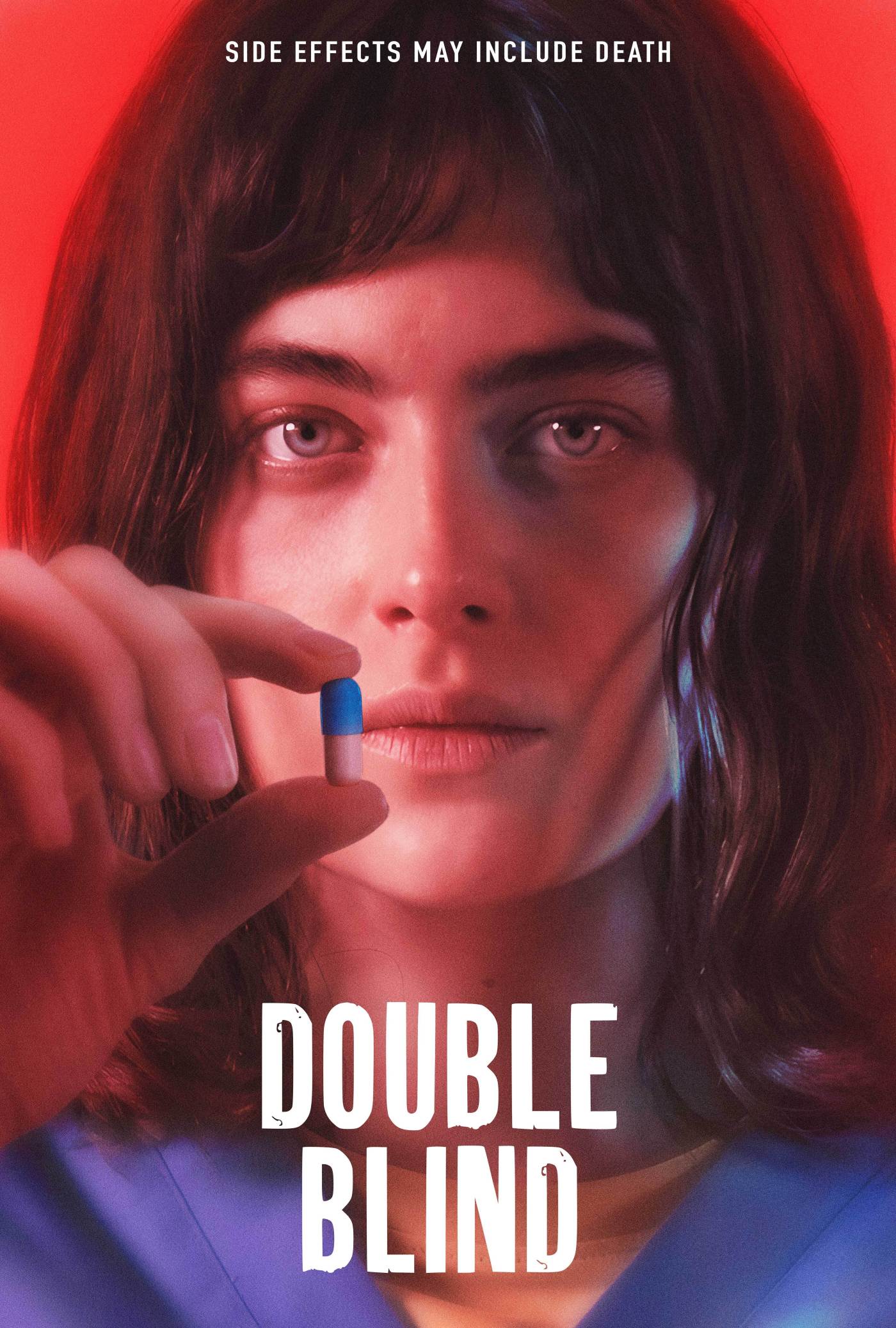
Check out Chris Miller’s interview with Ian Hunt-Duffy on his latest film Double Blind.
Director Ian Hunt-Duffy Dishes on Epic Pictures’ Latest Feature Double Blind
If you fall asleep, you die… This is the premise of Epic Pictures’ latest feature Double Blind, which is available on VOD now. Written by Darach McGarrigle, Double Blind marks the feature directorial debut for Ian Hunt-Duffy who, along with producer Simon Doyle, run the Dublin-based production company Failsafe Films. The official synopsis of the film reads “After an experimental drug trial goes awry, the test subjects face a terrifying side effect: if you fall asleep you die. Trapped in an isolated facility, panic ensues as they try to escape and somehow stay awake”. The film stars Millie Brady (The Last Kingdom, The Queen’s Gambit, Roadkill) alongside horror icon Pollyanna McIntosh, who can next be seen in AMC’s upcoming The Walking Dead: The Ones Who Live. McIntosh is best known for her role as Jadis on The Walking Dead and The Walking Dead: World Beyond and as the lead in Lucky McKee’s cult horror The Woman. In the below exclusive interview, we spoke to Ian about the making of Double Blind.
Chris Miller: You and writer, Darach McGarrigle have worked together on a few horror projects (Gridlock, Low Tide) before Double Blind. What is it about the horror genre that keeps drawing you to it?
Ian Hunt-Duffy: As a director I love stories full of suspense and terror, and the horror genre really allows you to experiment with tension and atmosphere and create stories that grip an audience. Both Darach and I are big fans of horror films that have a clearly defined rule that the characters cannot break- in Ring it was: “Don’t Watch The Video Tape”; Tremors: “Don’t Touch The Ground”; It Follows: “Don’t Have Sex” ; A Quiet Place: “Don’t Make A Sound”. These rules offer a great hook for the audience, so we wanted to create our own high-concept horror with Double Blind and the rule of “Don’t Fall Asleep”. I was excited because it takes something innocent and everyday like sleep and twists it into something sinister, and I knew if we could make someone closing their eyes scary that we could have a lot of fun with it. Horror is also a great way of dealing with a certain theme or topic in a heightened way, in a more accessible way for an audience. The best horrors always held a dark mirror up to society at the time, and we tried to do that with Double Blind too, dealing with the young generations’ fear and anxiety about the future. All the characters in the film are young and directionless, they have no secure income, they are not on the property ladder- which speaks to a lot of young people’s experiences in Ireland today unfortunately. By filtering it through a horror or genre lens, it just makes any message or subtext much more entertaining and digestible.
CM: Were you always on the same page when it came to bringing the screenplay to life, or were there any notable changes that were made by the time cameras started rolling?
IHD: I think by and large we were on the same page, and any changes to the screenplay during filming would have come out of necessity, be they demands from the budget or schedule, or just logistical problems that inevitably arise during production. For example, the location might have been different that originally envisioned- there’s no longer a door here, so how does that change the scene; or we don’t have enough time to film this monologue as written, so is there a shorter version of this or can it be said with a look instead of a piece of dialogue; can we shoot this sequence in a more economical way– things like that.
CM: How did the idea for Double Blind come about?
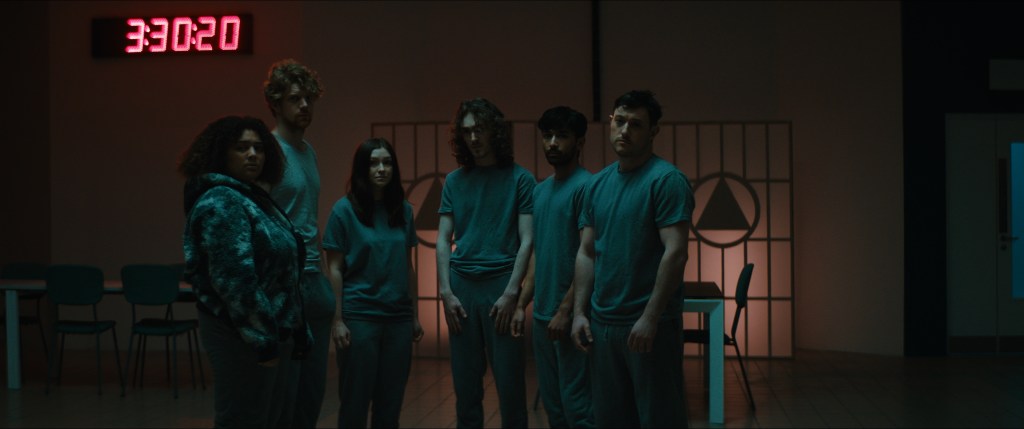
IHD: I knew for my first feature film that I wanted something self-contained but high concept. Darach and I both love ensemble stories, where a group of mismatched characters are trapped together in one location. Rough but sympathetic characters in an extreme situation, like John Carpenter’s The Thing, Alien, Southern Comfort or Green Room. As I mentioned earlier, we’re also big fans of horrors with a clear hook. So, when Darach had the idea of “If You Fall Asleep You Die” I just thought it was so evocative and memorable that I knew it was worth developing. That was the jumping off point, and from there we came up with the idea of clinical drug trial gone wrong, and 7 young participants all trapped together in an underground medical facility, slowly turning on each other.
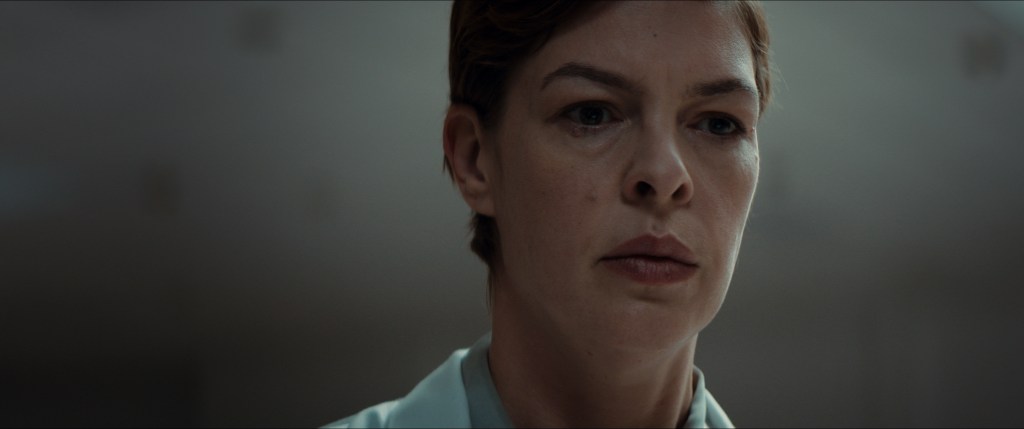
CM: Double Blind stars Pollyanna McIntosh, who a lot of people know from The Walking Dead. Were you a fan of hers on The Walking Dead or had another one of her performances caught your eye?
IHD: Yes, I was big fan of Pollyanna’s work, she’s a horror icon! Not just from The Walking Dead, but also The Woman and Let Us Prey. She also starred in Exam– another self-contained, one-location thriller, that was an influence on Double Blind. So, it was amazing to have her come on board the film and share her years of experience with us.
CM: What did pre-production look like for you on Double Blind? Did you story board?
IHD: I tried to be as prepared as possible and have a really strong vision for the film in my head that I could then clearly communicate to my cast and HODs. So, I spent months in advance doing my own visual research and prep, searching for inspiration and reference material wherever I could it- Film, TV, Art, Photography- basically collecting as much visual material as possible, and then curating it all into an extensive lookbook and mood boards for the film that I could share with each department as a jumping-off point. We also cut together a sizzle reel from other relevant films in the genre, to further demonstrate the style and tone I was hoping to achieve. I like to break down the script and shotlist myself first, before sharing it with my cinematographer, Narayan Van Maele, who would then add or change things, and we would also do photo story boards, taking photos on location recces with me standing in as the actor. I also storyboarded some key sequences- the death scenes, or anything involving any stunt work, or SFX / VFX. I’m not an illustrator by any means, the drawings were all extremely crude or basic, but they helped me communicate what I was going for and having all this as a solid foundation to build upon really helped, I think.
CM: The Blackwood Pharmaceuticals video at the beginning of the film has a lot different vibe than the rest of the film. Did you do that as a way to accentuate how cold and sparce the facility is? Did you shoot that footage too?
IHD: Yes, that was the intention. I wanted to create a juxtaposition between the corporate face that Blackwood presents to the world- the nice, family friendly brand image – and the more cruel and evil reality of what they’re doing behind closed doors. The footage in the corporate video at the beginning was comprised of stock footage, and we purposely used footage that was all exterior, bright and sunny, to contrast and emphasize the cold, sterile and windowless basement facility that our characters will become trapped in.
CM: What was your favorite day of shooting Double Blind? Why?
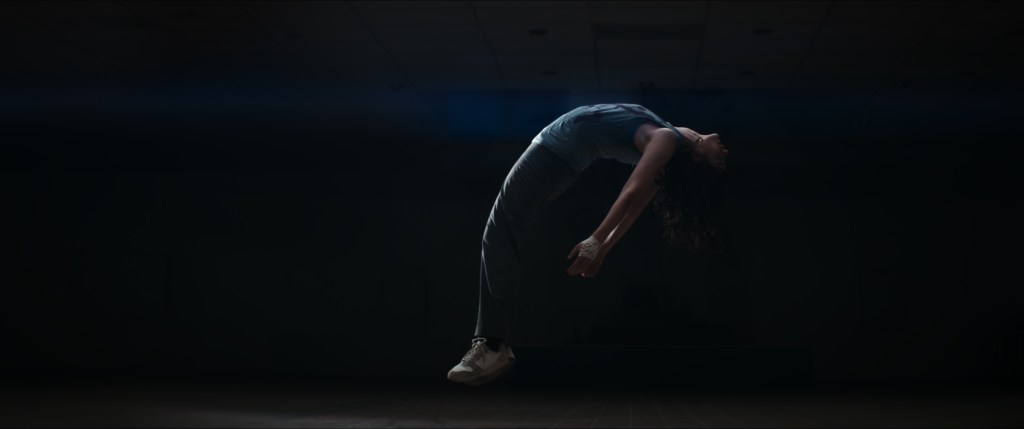
IHD: I think the day we filmed the levitation scene with Claire was a lot of fun. I had never done any wirework before, and given our modest budget, I didn’t really know if we could actually achieve the scene as it was written. In the script she rises all the way up to the ceiling and swims down through the air, but I remember trying to temper Darach’s expectations, that she might only be a few feet off the ground! So it was really exciting to see what our stunt supervisor, Lauterio Zamparelli, and his team were able to accomplish. Millie Brady who plays Claire also really enjoyed the physicality of the role, so she was eager to do all the wirework and different stunts.
CM: Can you tell us something about the making of Double Blind that might not have been revealed yet?
IHD: It was an incredibly tight schedule with only a 23-day shoot, so there was never enough time. As a result, my 1st AD, Stephen Fuller, had meticulously scheduled everything, but on just Day 2 of the shoot, one of our actors got Covid and had to isolate for 7 days. So straight away our schedule was out the window! We had to quickly rework our shotlist and schedule to try and keep the show going. Luckily however, we noticed that our Key Grip, Charlie Beresford, had a very similar hairstyle and physique to the actor, so we decided to put a costume on him and use him as a stand-in! We shot over his shoulder, or positioned him in with his back to camera, or deep in the background, and it worked out. Nobody has spotted the difference so far!
CM: Is there another type of horror movie that you would like to make next?
IHD: I’m in development on the next film with Darach at the moment, another horror film with a high-concept, but this time on a bigger scale. While Double Blind was contained to a single interior location, this new story allows us to paint on a larger canvas, restricting our story to the confines of a small, isolated town. So I’m excited to create another tense, pressure-cooker environment for our cast of characters.
Chris Miller
Leave a Reply