
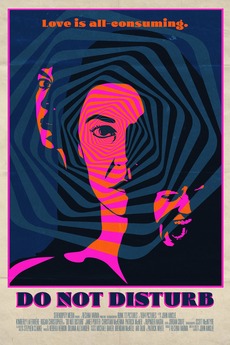
Do Not Disturb is a whip smart film that uses cannibalism as a way to dissect the way we allow relationships to emotionally consume us. Now available via streaming, John Ainslie sat down with Lisa Fremont to talk about the nuances and difficulties of tackling such a complex story. Below is the video (used with permission) and the transcript below that.
Transcript
We’re here to talk about Do Not Disturb because it’s now on streaming platforms, which is exciting. You had a really great run with the festival circuit.
Yeah, we had a fun little run. We were lucky enough to open here in our hometown of Miami at Popcorn Frights, which is just like a super awesome festival run by a guy who kind of, like, really loves genre films. And not just horror films, but like, genre films, genre films. He really kind of like, embraces everyone and really kind of like tries to create a community, which is great. And then we went over to FrightFest, I think five days later, Fright fFest is a pretty big festival, so it was nice. It was nice to premiere and play in a theater, kind of like a block from where the movie takes place and then, you know, stumble out and have drinks where Chloe and Jack might have had drinks. That’s kind of fun that way.
That is fun! So it’s set in Miami, but you said you did the interiors all in Canada.
Yeah, so, we shot in a small town called Sainte Marie in Canada and we shot the hotel rooms in about ten days, and then the club scene and the restaurant scenes in one day. So, it’s kind of fun dressing and lighting for Miami and then we came down to Miami and shot all the beach scenes and the credit sequence and things like that.
So that was my next question : how many days were you in that hotel room? Ten?
Not enough.
Oh no.
No, I mean, if I could ever have like, a 20 plus shoot day schedule, I will. It was quick, like we were doing 12 to 14 page days, which is quite a bit for both the heavy dramatic scenes and for the effects scenes, which take forever. So yeah, I mean, we went in really hard and we started with when they enter the hotel room, is the first thing we shot. And then we did that whole the night of argument in the afternoon, which is pretty much stepping into everything right away for the actors. It’s tough and you kind of adapt the way you shoot to that.
Did the actors know each other previously?
Nope. I think they met the night or two nights before shooting. We all went out for dinner. My wife produced the film and the four of us went out for dinner the night before or two nights before, I can’t remember which. I think they had spoken on telephone and emails and that kind of stuff, but no, they never met.
Well, that just speaks to how well they did, because it immediately feels like a lived in relationship. Feels familiar, I think, to probably a lot of women. I know your wife worked with you on this, and I’m curious how much input she had in the screenplay.
Quite a bit. I mean, she’s giving me notes for eight years, so little things will, you know, pop. It’s impossible to measure, but, it’s quite a bit because you’re always talking and then as you go through prep you’re discussing everything and before the actors and the cinematographer or the editor, come on, I’m doing everything with her, building everything. So quite a bit, I would think.
I mean, it’s really hard because it’s, like, it took so long to get this thing to camera. It’s the tiny details that would never come to me in a lot of ways and I think those tiny details kind of add up in a weird way and it’s just the little things about relationships, or being a woman, that would never occur to me. I could probably come up with some of them just observationally, but it’s those little things or just a line of dialogue or reaction. You know, having Chloe react angry rather than afraid, or one of those things, you know.
Yeah, when she has to literally clean up their mess. It’s really funny as a mom especially: she immediately just takes care of it. She starts mothering him and just takes care of the situation and he just falls back into the child mode and I thought this was really putting your finger on a thing that women complain about incessantly all the time.
Yeah.
So how long had this been brewing ,the story and the film? And how long did it take you to get it from A to B?
I think forever, felt like forever. In 2012 was my original. I was sitting in a conference and I wrote down the words, ‘honeymoon couple developed cannibal sex fetish’ and yeah, I mean I don’t know what brought that on necessarily. I can trigger sort of like watching Altered States way too young. I traveled through Mexico and that rubbed off a lot of ways and then I kind of wrote out a first draft that wasn’t too dissimilar from the final product. It was more gag heavy and less relationship heavy and then I reworked that. It took place in Mexico originally and there was this whole village of half eaten people who were using this peyote ceremoniously, this like strange Aztec Christian combination church but, you know, on my budget, building an entire village full of half eaten people was not quite in the budget.
So I’d rewritten it, but then at one point I rewrote it from Majorca and then Covid hit and that production went away and we ended up doing this one during Covid and my wife and I moved to Miami, so we just said Miami to make it easy to shoot and fun.
That’s interesting that it’s a covid film because there’s a lot of horror films that you kind of watch and you think,” this is a covid film” : you can tell because a lot of things were prohibitive at the time, but this feels natural because it’s them in their hotel room going through a relationship that, it seems, was over before they even walked through that door.
Well, I don’t know about over, but I think people get comfortable in relationships, so it’s easier to stay than it is to leave sometimes and I think, after you go a decade or so into a relationship, it’s like that, that little, you know, whatever, that it ties together even further, especially if that relationship starts at a young age. They haven’t dated a lot of other people, so there’s that too and then I think for Chloe, and that was a big part of casting Kim and writing that character closer to 40 than 20, was her kind of being stuck in this relationship. Because if her ultimate goal is to have kids and start a family and she’s, you know, 36, 37, 38, there’s a limited time to, like, dump this guy and meet a new guy and build a relationship and have kids. So, the clock’s ticking for her and I think she’s trying to make this work rather than starting over.
So in the original script, was she always closer to 40?
I don’t know, actually, I don’t think I had quite an age in mind and then there was a lot of like opportunities to make the film younger which I was never quite interested in because I think it would have changed a lot. I mean, those opportunities would have been an entirely different film that I don’t even know if I’m capable of making, but they might have sold better. So, yeah, I don’t know if that’s the kind of the film I want to make just for the sake of making a film, so I said no. Because even during casting, there were some options; we opened it to anyone and everyone because it was more about finding the talent and making the script fit to to the talent, especially at our budget where you’re completely limited. Luckily we got Kim because Kim was amazing.
Kim’s amazing.
Yeah, we were really lucky. I literally looked at over a thousand tapes of people and it was two that I liked and Kim was one. Kim came out of nowhere because I didn’t really know Kim aside from a chance encounter like six, seven years ago at an after party where I was out of money and just kind of like, sad and I just wandered over to the bar and she just wandered at the same time, and she bought me a shot, and we did a shot of Jameson, and then she walked away and I was like, I don’t even think she said words to me and then we didn’t talk for like five, six years until we hopped on the phone and it was funny because I saw her on my agency’s roster and I asked my agent who reps her, and my agent was like, I do, and then I was like, oh, well, give her this script and then Kim and I talked for about four hours on the phone the first time, and maybe that was because of Covid, because that was in the middle of Covid, where you weren’t allowed to leave your house. But it’s funny because we didn’t really chat about the scripts very much. It was all about like relationships and life and just weird things. And then we got off the phone and my agent’s like, well, what does she think about this? I’m like, I don’t know, like, she gets it. Like it doesn’t really matter. And then from that point forward, she kind of built Khloe. I mean, I try to write very specifically so that you can read my script and have, you know, which way to go and then hopefully I’ve written specific enough that when people bring their ideas to it, it builds on what I’m already launching them towards rather than branching, which I learned the hard way. And on this one, it sort of worked really well. Rogan I mean, Rogan had a little trouble with Jack at first because I think he tried to play him as a douchebag or like an asshole and I was like, no, no, no and him and I really went through multiple scenarios of who Jack was and built jobs and training and a past this and it’s when I said the word ‘manchild’ that it kind of clicked and then that was it. And he does,he acts like a child through the entire film.
He really, really does. I rewatched the film last night and I think I hate him.
Well, that was a challenge because I didn’t want him, I don’t want you to hate him necessarily right away. No, I wanted you to dislike him, but he’s also very similar to, like… I mean, the amount of men under the age of 30 I’ve had come up to me and say, I can’t watch this film with my fiancee because she’s going to dump me because there’s too much of me in this guy, it’s quite high. I couldn’t have him be a nice guy because then you’d want him to live or you’d want Chloe to be with him and then she would seem like a bitch. So it was a matter of not making Chloe too mousy or, tolerating of his bullshit. You try to give her enough push to make it feel real because she has to find her agency: he can’t have it at the beginning. So that was the hardest part and that’s probably the the part that I worked on with my wife the most because it was like, she doesn’t want to do drugs and the early drafts read like she was this mousy woman who has never done drugs and is afraid to do them and I was like, well, that’s not quite what this is. So it’s kind of hard, on paper, to translate that. Once you give it to Kim and Kim gets it, Kim just does it and you film it and you go, but on paper, that was the biggest challenge of this entire film, actually explaining to people what I was doing because so much of it was in my head in terms of the comedy and the blend of reality and the mundane, so explaining it to people was difficult. I don’t think anyone really understood until they saw it.
Yeah, it is kind of hard to explain, especially if you use the word cannibalism, I think you immediately lose a certain fraction of people. Which, I mean, cannibalism will get me in the chair, and so I was really, really pleasantly surprised at how smart and layered this was and wasn’t just cannibalism.
Well, it’s tough, like Raw did it well as well but, it’s hard because you say “cannibalism” and then the people who want to finance your movie want cannibalism and this movie doesn’t really live up to the Gore expectations. I mean, there’s good gore at the last bit, but if you’re a gore hound, this isn’t necessarily… you’re going to be fast forwarding, I think.
It fits really nice into the genre of “Good for her” films, though.
Yeah.
You’re your first film, The Sublet, I really loved because, again, it felt really informed about what women think and feel and it really captured what being alone with your baby is like. It’s strangely, strangely isolating and so now here you are again with this really intuitive look at women. So I’m curious why you choose that, and especially with this film, did you find that, maybe, metaphors and meanings and cannibalism kind of started to weave together more than they had initially?
Yeah, definitely. We were discovering things as we were shooting and Scott and I talked about light a lot. If you look at the film and I’ll come back to the point of this question, I got sidetracked right away.
I asked too many questions at one time.
Scott and I both, like day two, kind of realized Jack, the character, bled into Rogan and he was doing this thing where he would stand in front of Kim often and steal her frame, and it would really annoy Kim, but she’d act through it and then she’d move and the camera would move and he would move and it was like, no, this kind of works because, like, she is in his shadow until she emerges. And we kind of played with that. And even when she’s eating Wayne, she looks up and it’s a gorgeous shot and we’ve put Rogen’s shadow covering her entire face, which is not, cinematography wise, the smartest thing to do, but it tells her story and that she’s now completely in his shadow. And the same goes with Rogen right before his end: it’s right after he can’t cut up the body and it’s that exchange of the knife for the sponge: the roles have reversed now and he is between the light and then he turns his back on the light and his face falls into darkness. He’s no longer a human. So that was kind of a fun thing and, metaphorically speaking, dark and light very simply. But the big metaphor was using cannibalism to express how we eat each other alive emotionally in relationships. Or bad relationships? Maybe even good ones, but mostly bad. I mean, because if the relationship is good, you’re happy to and maybe that’s why Jack does give it up at the end. Maybe it’s this one act of redemption.
I don’t know why I write female protagonists. That’s funny, because I only have one script right now. Sorry, I’m writing a second one right now where it’s male leads and I have no clue why and I’ve thought about this. I don’t know if it’s more interesting to me or if it’s kind of willing my bad decisions …like like she should have reacted this way and so, you know, do that, I don’t know. I tend to write relationship movies, whether that’s friend relationships or intimate relationships. I tend to think, as a writer, women are more interesting in terms of the fact that they express themselves, whereas men tend to bottle things up inside and women bottle things up in a different way. Also, I tend to start with trope and then branch out because I like playing with expectations and then flipping them. So it’s like starting out with this dutiful housewife who is trying to meet all the criteria and then flipping that is way more interesting.
Well, you you excel at it. I enjoy your characters very much and I think if she had been younger, it wouldn’t have been nearly as interesting. She wouldn’t have had agency, I don’t think.
Yeah. It takes out the 23-year-old complaining that her boyfriend doesn’t want to get, you know, a family together: she’s got time. Even when you’re 38, you’ve got time, but the time feels different for you personally, I think.
I’m really curious now about how, originally, there was the village and a bunch of already eaten people. When you had to get rid of that, did that change a lot of the story or the characters?
Not really. I mean, it changed the way they got the peyote, but that was it because the rest kind of the hotel room stuff kind of stayed the same. The main reason for this village thing was that I hitchhiked around Mexico a lot and you do end up in these weird little villages, and there’s a lot of ghost stories, and you tend to buy into it when you go. It’s kind of like weird in a good way. At the end, I wanted her to return to this village and sacrifice herself, and there was an homage to Todd Browning’s Freaks, where at the end she would be this, like, half eaten, disfigured chicken lady begging in the street, and another young couple would come in to buy peyote, and she tried to warn them, but she can’t, she had no tongue. Then I rewrote that; I think the idea of her going home and having, sort of, a happy button on the end of the film, because it is, ultimately, it’s a weird, happy movie. But I mean, ultimately, she, like, frees herself and goes home confident and ready to take on the world. So in that way, it is like a happy ending film, just not for Jack.
Oh, Jack didn’t do himself any favors.
No, but Jack went willingly at the end.
He did. And I do think, going back to that, I think it was the one kind thing he finally did for her and that nice. It was appreciated.
And it has an impact. It’s funny because if you’re on Letterboxd, there’s one person’s review and that’s all it is: “Are you hungry?” And that’s it. That’s really intuitive.
It was really sweet of him. The first time you watch it, he’s a manchild, he’s a little annoying, then when you go into it knowing stuff already, I just thought, “Oh, I can’t wait for her to eat him.” He is just not listening to her and I love it. And then, you know, you said you blend in comedy and you really did. I just noticed this time the t shirt she’s wearing in the cab on the way home. Whose idea was that?
It’s funny, I got that idea when we were shooting the club scene. I knew she had to go home and I was like, “Just covered in blood?” and what’s she going to wear? And then it was sort of like an homage to Pulp Fiction, where they end up in t shirts after cleaning up the blood. So it made sense to me. And it’s funny because if you read the Pulp Fiction script, it originally said, “I’m with stupid” is one of the options, and the other one is actually what was in the script. And I don’t know why they couldn’t get the I’m with stupid, but Sam Jackson has that. He’s like, I get the I’m with stupid one.
That was really funny. I didn’t notice it originally and with the look on her face, you know, good for her. It’s such a fun and interesting movie. It’s not just gore: there’s other stuff going on and that’s what makes it, you know, watchable multiple times.
Thank you. Did you notice that she looks into the camera at the end after that? This time? Yeah. Yeah. Okay. I didn’t know how. Like, it’s funny because it’s like one frame both ways. Kind of just messed with that one.
No, she she was amazing.
Yeah. Kim’s a really talented actress. It was hard working with her because I didn’t have to do much.
Yeah. She trusted you a lot, is what it feels like.
We were always on the same page, so it was nice, but I’m a director who likes to do a lot of takes and she would nail it on the second one and I’d be like, well, I guess we’re not doing any more because we don’t have the time. So it was like, I got used to that one quickly, though.
Well, that probably was good because then you had more time for the practical stuff, right? I thought the practical effects were really good.
Yeah. I mean, that was the first thing that I did with Carlos. There was a lot in it for our small budget, and right away I was like, listen, I want to do less good than more bad, if that makes sense. Like, I don’t want to do a lot of them. What we do, it should look real. Then, that meant I lost out on a big one: that was when they eat Wayne. I wanted her to, like, rip his tongue out his mouth and then do the Lady and the Tramp spaghetti thing, but with the tongue and that was just not in the budget at all. But it would have been fun. I’ll save it for another movie. Although I don’t know, there’s two things I don’t want to work with again and I’m headed down this path: kids and these complex love stories. I’d like to do a movie that’s just simple, but I don’t.
I don’t think you can.
I tend to make things complicated.
But that’s what’s good.
Yeah, I know, but it’s a lot. I mean, especially the time, both this one and The Sublet was the time. And I don’t mean time spent, I mean the tracking what day it was. This one more so than The Sublet. And a lot of times, some of The Sublet shots turn into practice for this one, in a weird way.
Well, that’s helpful.
Yeah, that’s what I do. Multitask.
The cinematography ,I want to say ,is really beautiful. You guys should shoot a “visit Miami” video.
It’s ridiculous. With blood? No.
With it. I love the blood. Especially the end, with the arm.
Yeah, we stopped traffic. Well, that arm on the beach, every single person on the beach would stop and talk to us about it and take pictures with it. When she was dumping the body parts, we stopped traffic on the Rickenbacker and there’s like a huge, huge pool of blood in the water and she’s dropping arms into it, so I don’t know what people up on the bridge thought, but that’s funny. No one did anything. The police drove by and didn’t even look at us, so.
Okay, well, that’s good to know.
Yeah. You ever dumping bodies? Do it in bright, broad daylight, and the police just assume you’re a film shoot.
Any ladies listening? If we have a husband, we need to get rid of, just do it in plain sight.
Let the sharks take care of it. Sharks feed at night, though. That’s what I found out.
Yeah. That’s okay. I mean, we’re watching a movie about cannibalism. You have to suspend disbelief.
I try to get into the nitty gritty as much as I can and everyone was like, “She can’t cut a body up with a steak knife.” I was like, “She can. In this movie.”
I think an angry woman can do anything she puts her mind to.
That’s why she’s breaking it and snapping it. And like, you ever take a turkey apart? You’ve just you got to snap the bone and the cartilage and all that stuff.
And I love that shot where the camera is actually coming up at her as she’s cutting. That was really good.
That’s a fun one for two reasons. One, because it looks really cool and it leads into that fun edit where the noise blends into the the plates being tossed. The second one is because I know that my cinematographer, Scott, is lying on his back in the bathtub with the camera, and the special effects guy is sitting on top of him with a squirt gun squirting blood. So, there’s like two grown men around six foot tall in a small tub out of frame.
Are you happy to, maybe, talk about what your next project is?
I made a short called She Came Knocking in 2015, 2017, and I wrote a feature version of that which I’m trying to cast right now. And if we lock, if we do find an actress and someone who can finance the movie, we’ll shoot next year. I’m o, at the same time, working on a action thriller in the same scenario.
We’re looking for financing on it. I’ve got four scripts out in the world right now looking for homes.
That’s a lot! I really appreciate you talking to me and taking the time.
Thank you so much.
Do Not Disturb is available to rent or purchase on various streaming sites.
You can read my review of the film here.
Leave a Reply